
Memrise
Membot, AI-powered language learning
2020 ✦ Senior Product Designer
What’s the problem?
Can AI encourage learners to communicate in a new language?
TL;DR
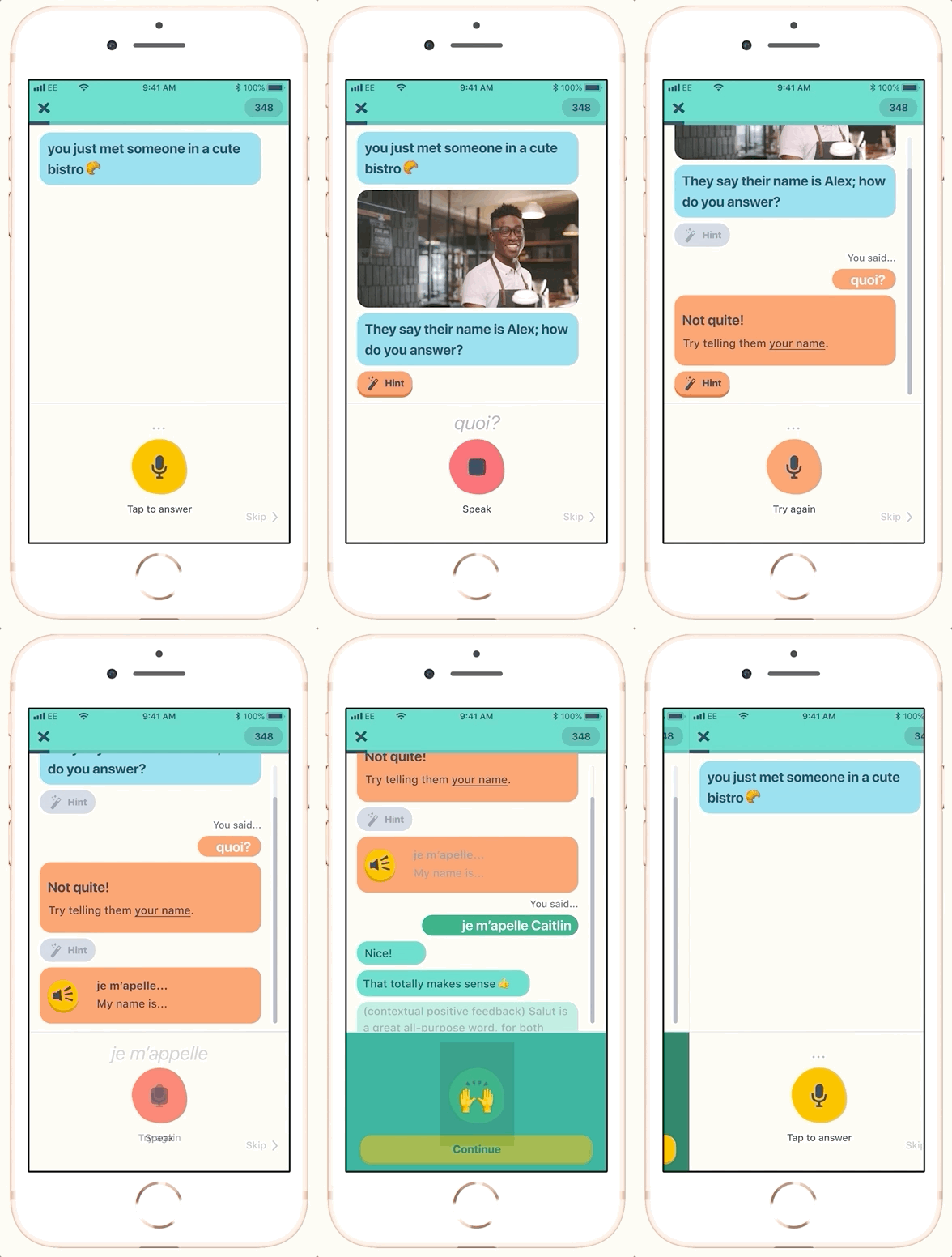
I designed and tested an LLM conversation feature for teaching languages before ChatGPT existed, which formed the basis of a feature that shipped to the whole userbase.
The TeamCait Goodale
Senior Product Designer, Communicate R&D Design Lead
Karolina Radzimirska
Junior Product Designer
Context and stakesMemrise is a language learning platform, employing immersive, engaging content of native speakers to make teaching fun, fast and effective!
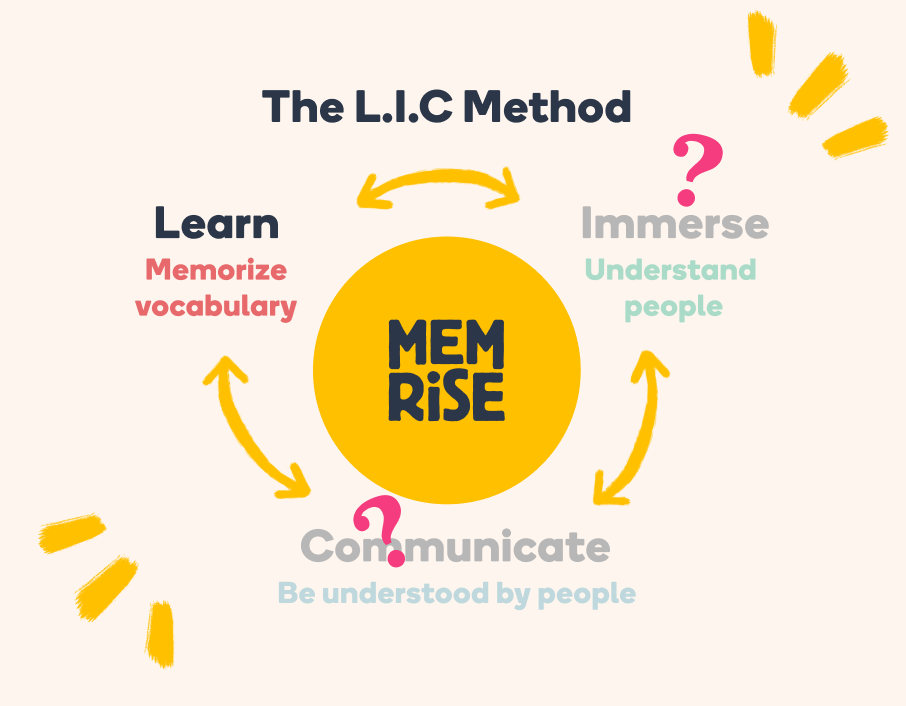
Immerse and Communicate were part of the pedagogic theory of the product, but were not reflected in the user experience.
In traditional language acquisition methods, encouraging communication is hard. Through an app, it’s almost impossible!
How could we leverage AI to encourage users to communicate, and supercharge their language acquisition journey?
Constraints
The technology available was limited at the time, as GPT3 had just been released.
We were rapidly innovating with the technical underpinnings of parsing natural language, alongside with the user experience.
Co-creation sessions
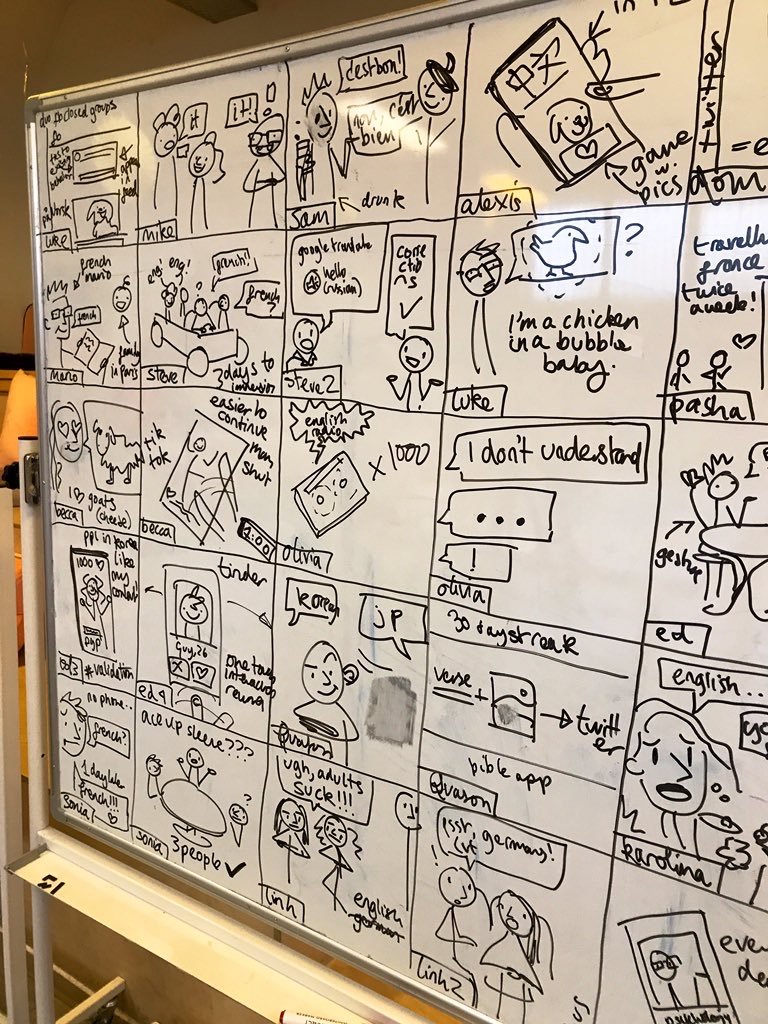
At the outset of this project I consulted our in-house education designers on their insights on how to get people communicating in real life.
To facilitate this, I ran a series of workshops and co-creation sessions. The R&D team came back to these learnings whenever we felt stuck!
Through research I conducted on motivation, combined with knowledge from our in-house language experts, we identified that any communication tool we built needed to be...
Timely. The prompt to communicate has to come at a high point in the user’s journey, when they’re feeling confident and willing to try something a bit scary.
Targeted. The communication prompt has to be at the right level for the learner (a whole other can of worms!)
Encouraging. Communication is about being understood, not being perfect. Feedback needs to account for this- traditionally a challenge, but hopefully AI and natural language processing could help us here!
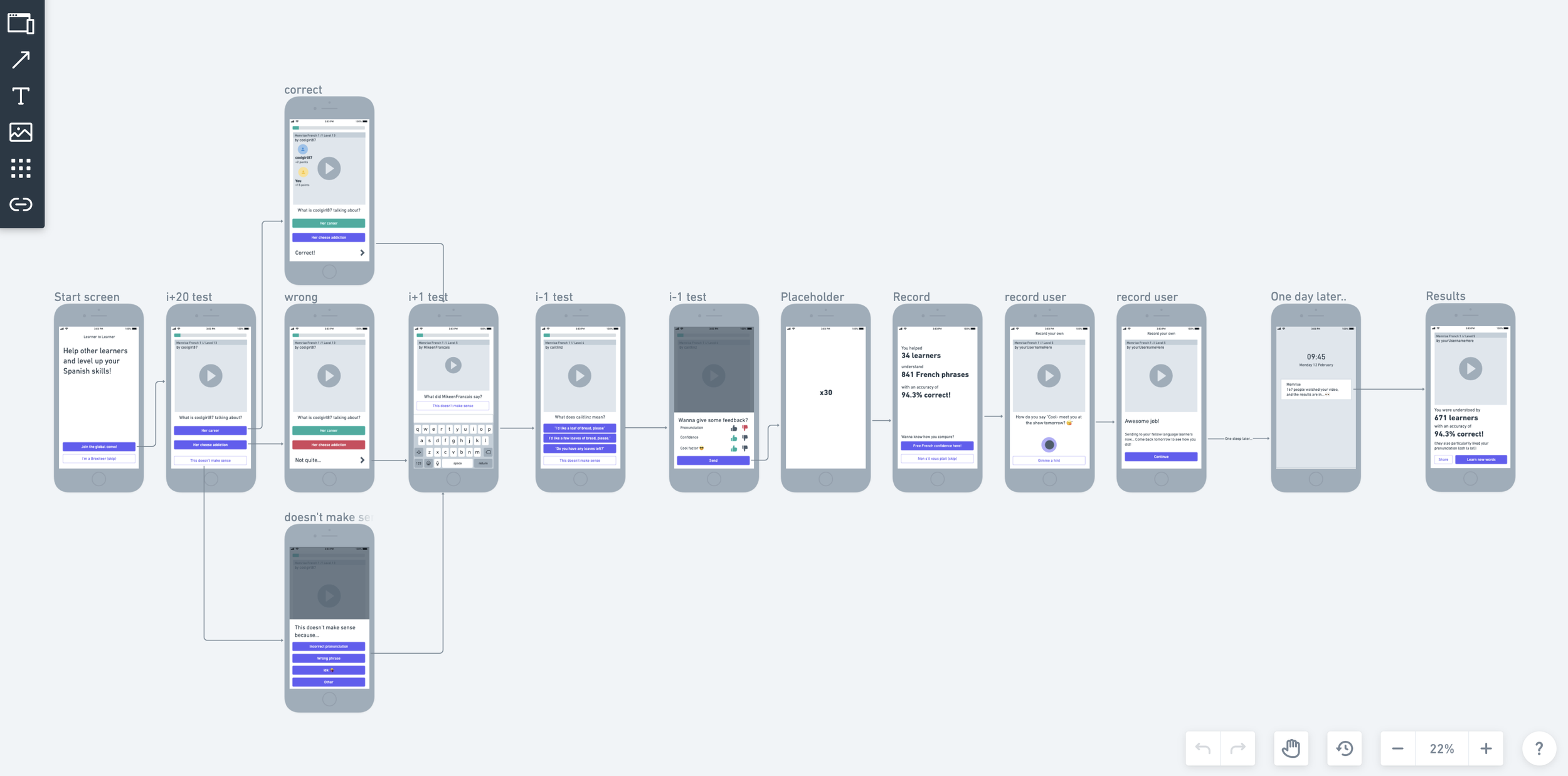
Wireframe flows to concept ideas quickly
To avoid the potential pitfalls of unmoderated user-to-user communication, we decided to leverage GPT3 and LLMs.
Placing the user in simulated language environments, they are prompted to respond in the target language, which was then analysed and responded to by our AI.
Positioning and the funnel
Regardless of what this feature was, we needed to make sure it sat in the right place in the user’s journey.
Based on the data gleaned from our co-creation sessions, combined with our existing user journey and funnel, I conceptualised a variety of touch points for this new Communicate feature.
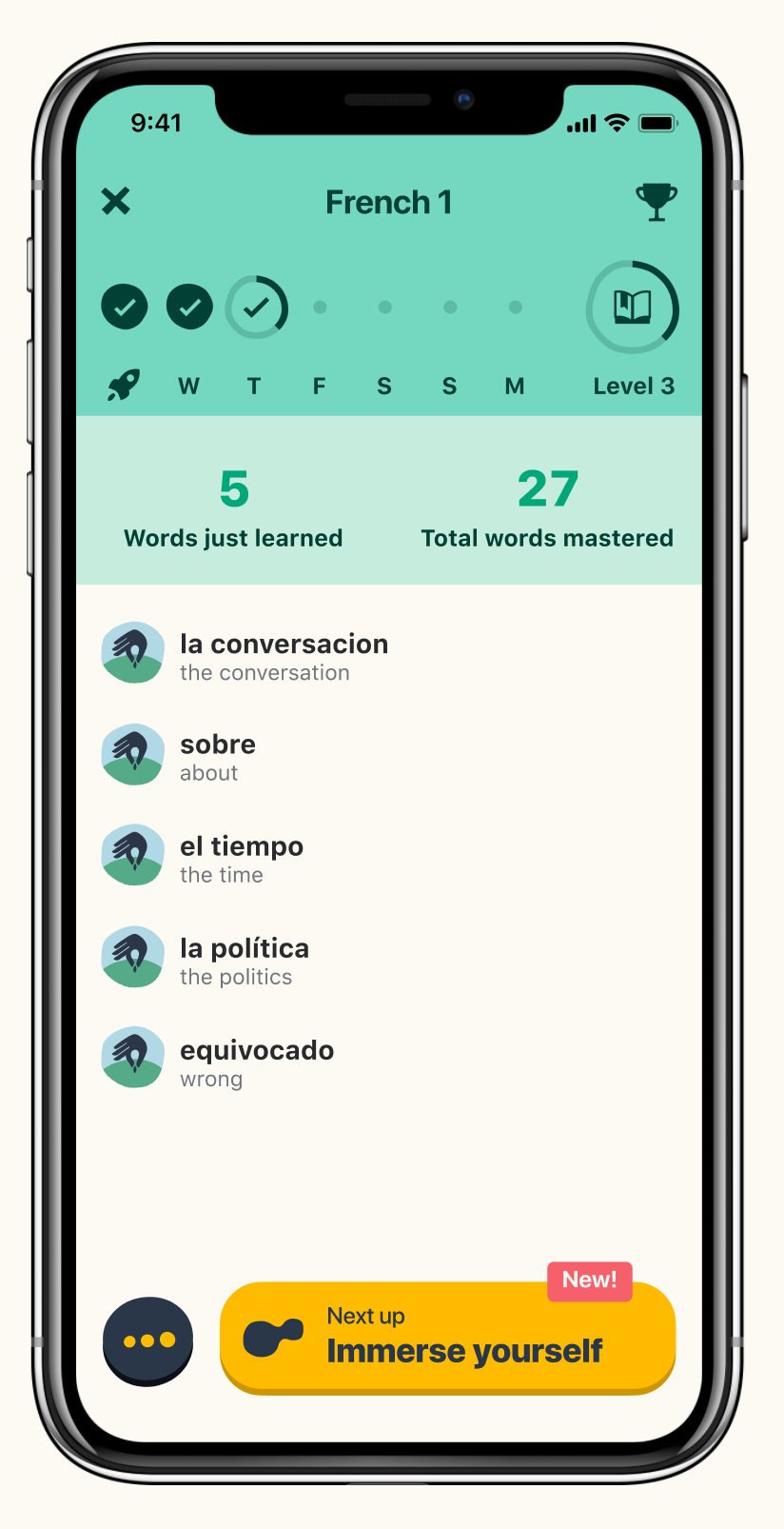
An end-of-session prompt, when the user is on a high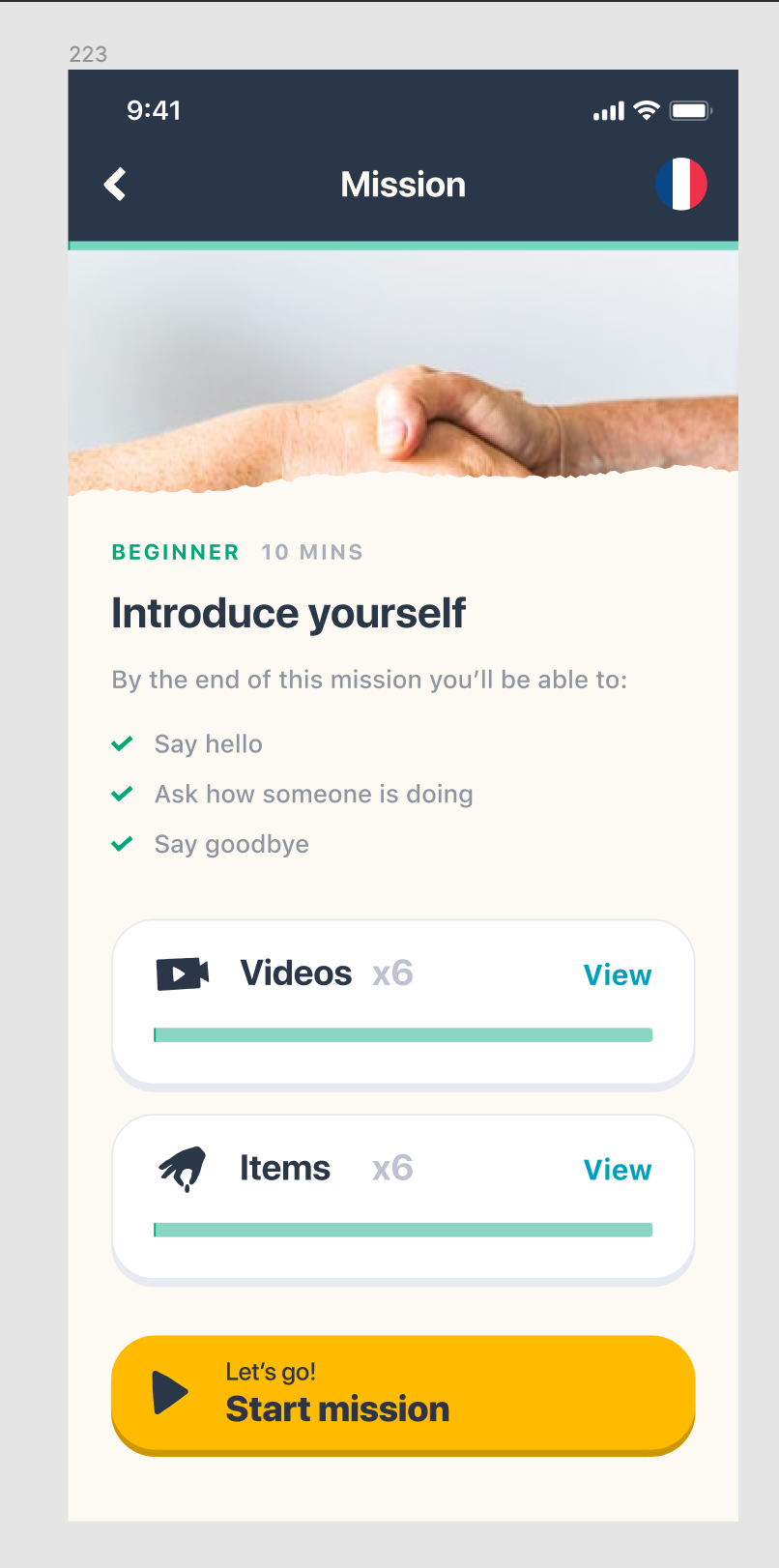
As a core step in onboarding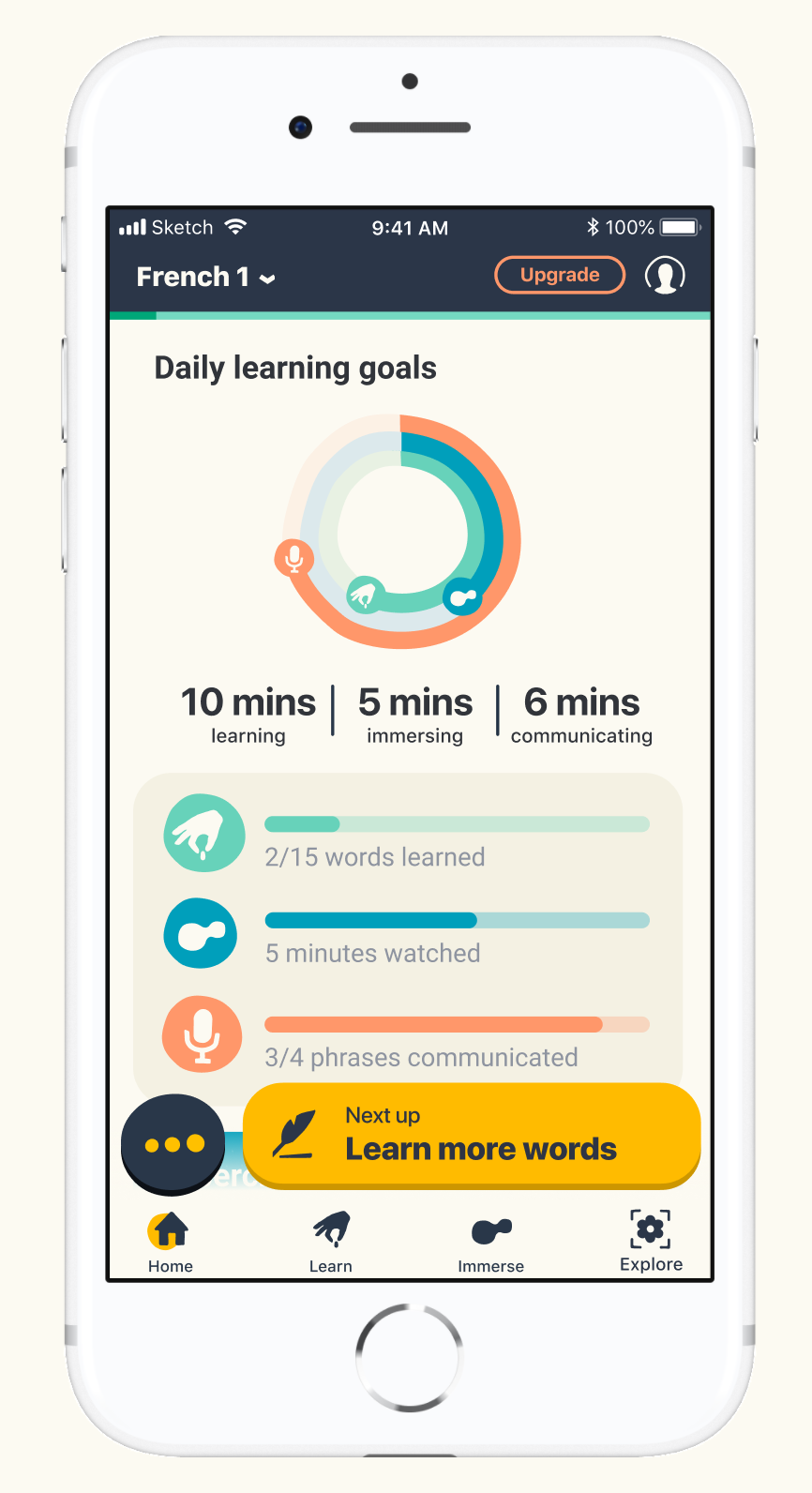
A daily ‘Communicate’ goal with a homefeed card…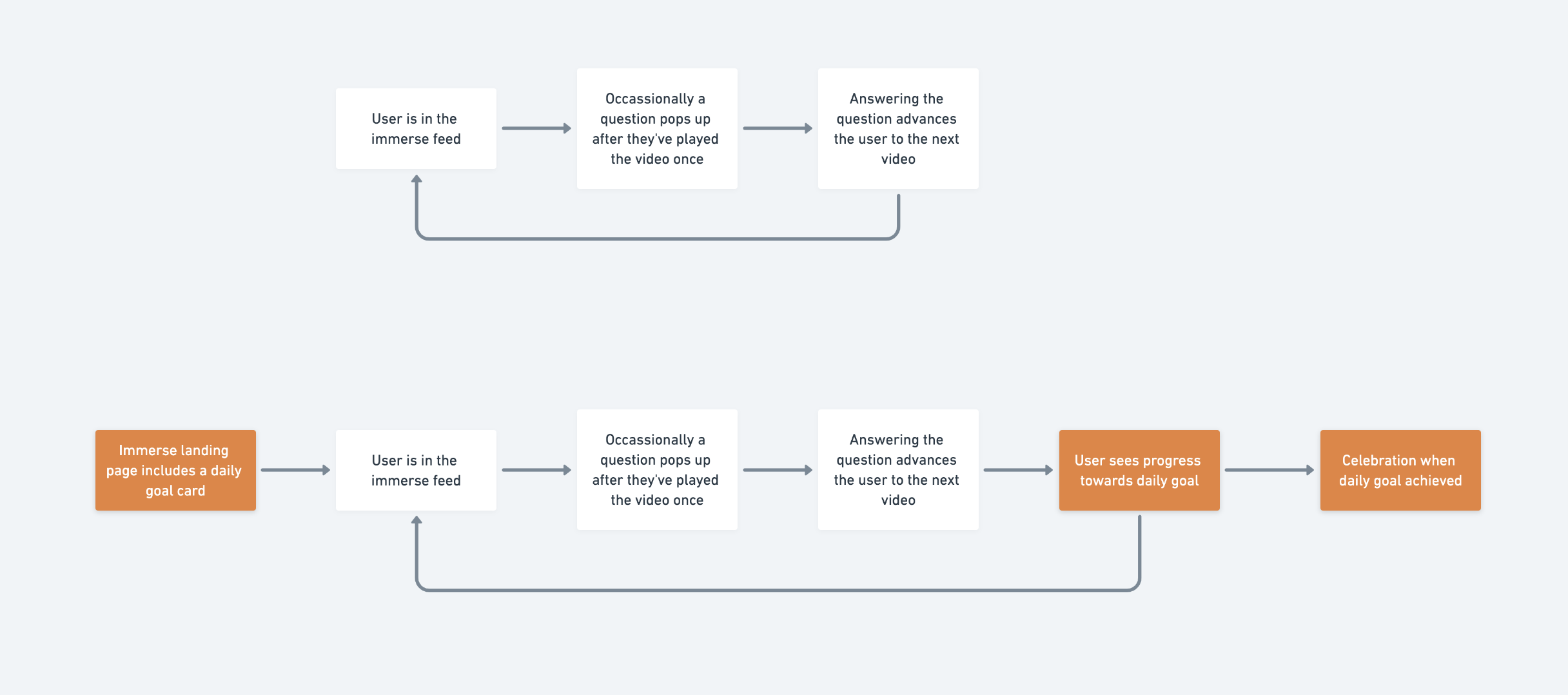
Prototyping
Due to the rapidly evolving nature of the core technology, we did not know the level of complexity of experience we would be able to ship to users.
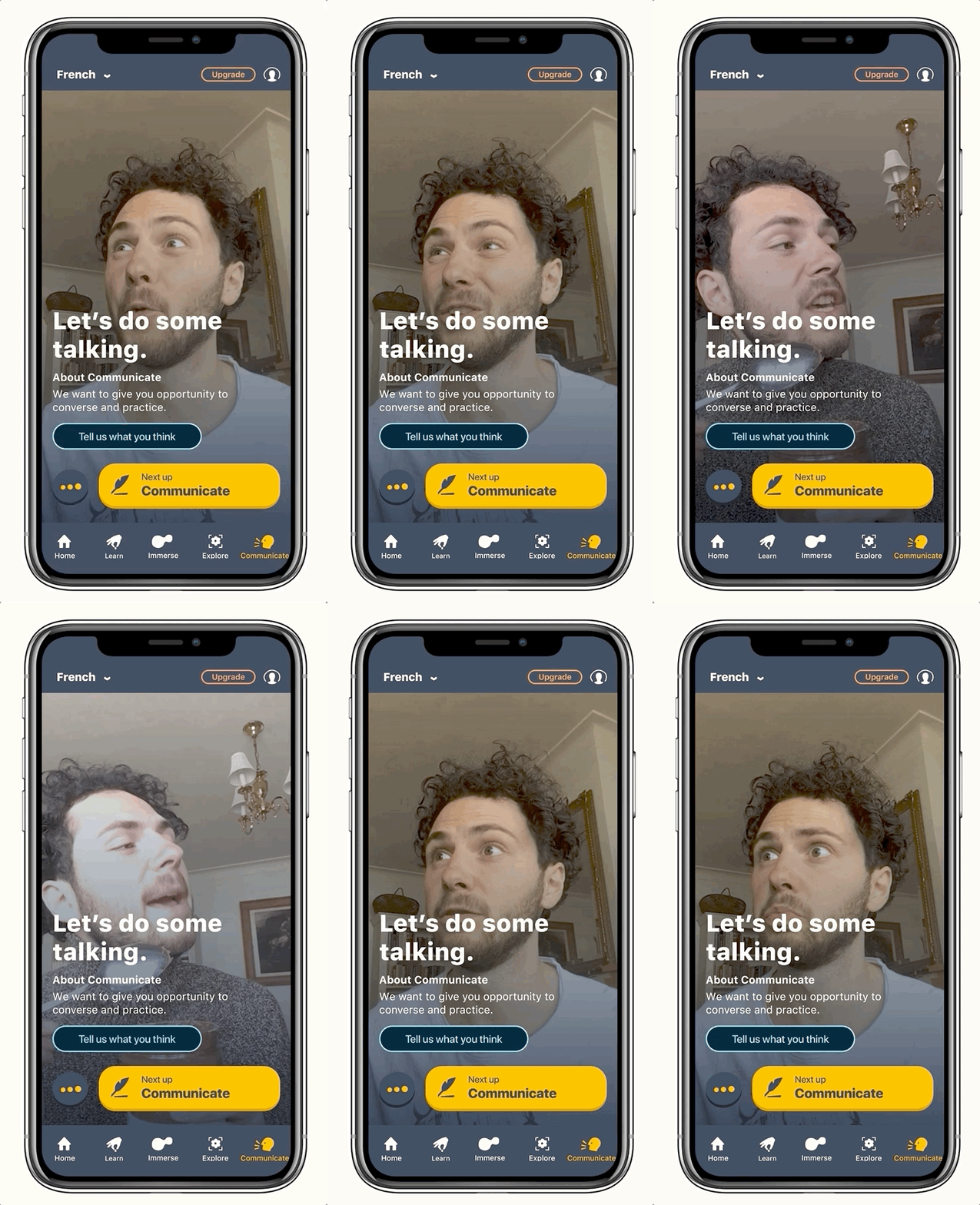
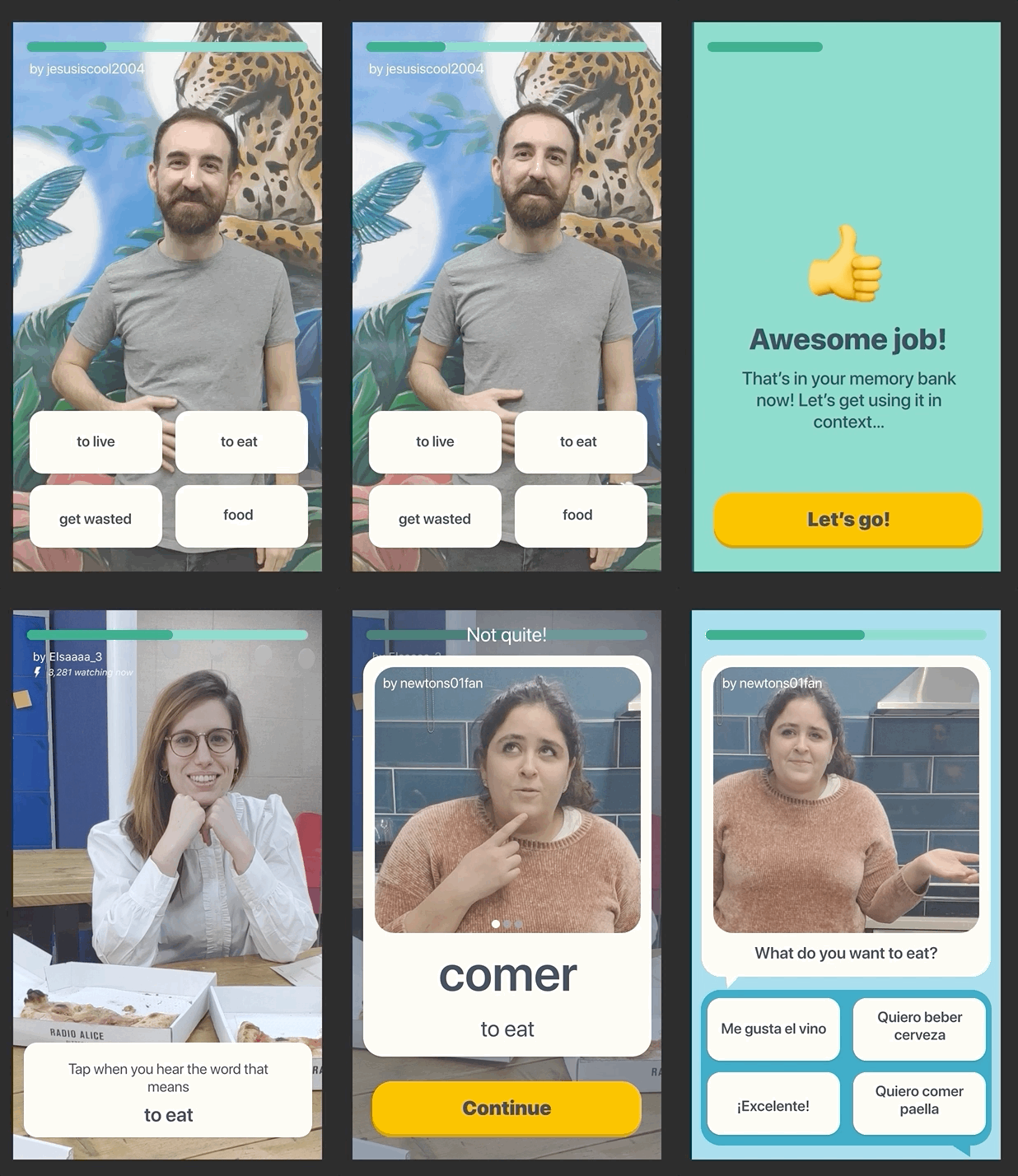
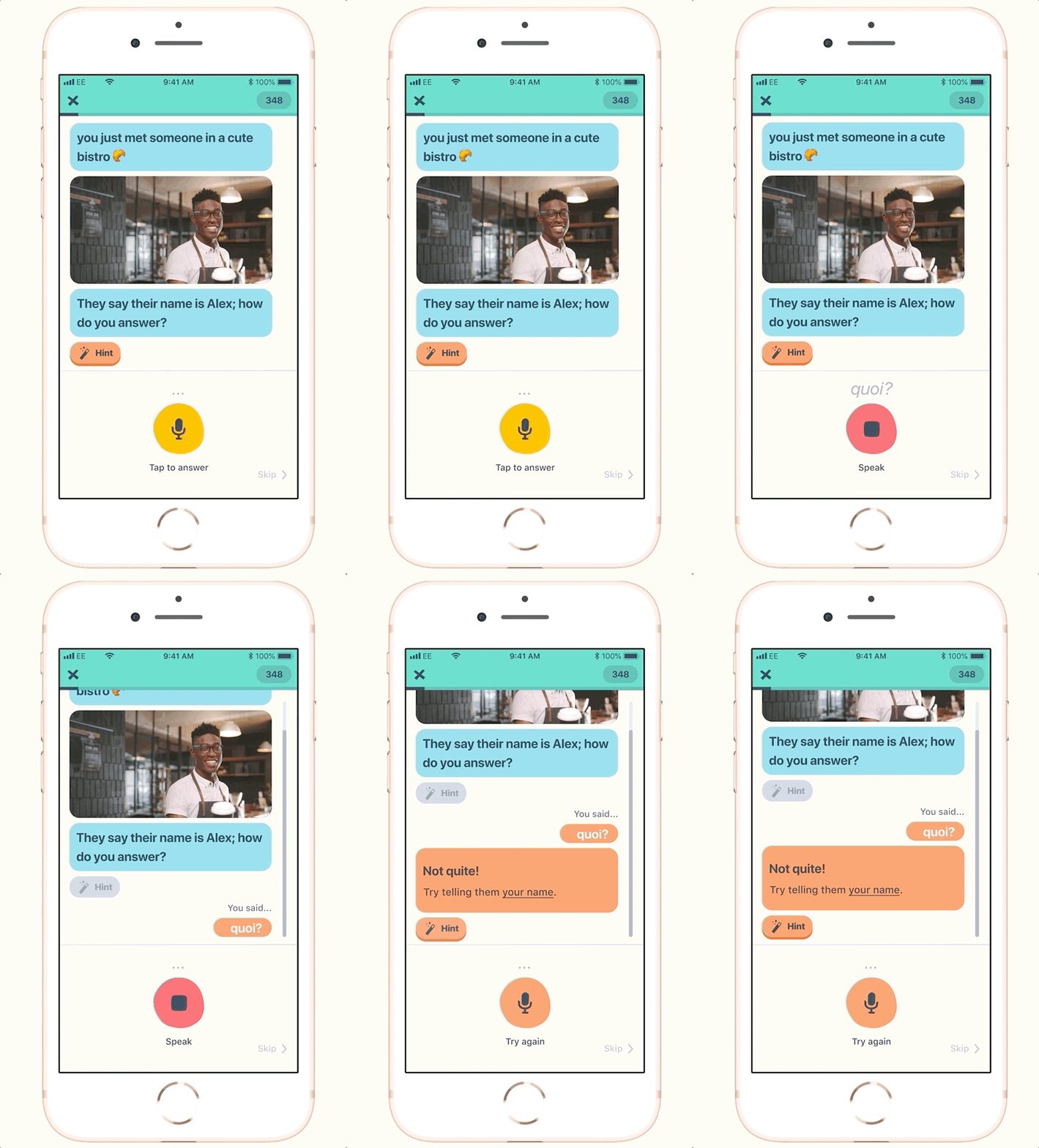
I prototyped a variety of options in Figma, from realtime transcription and translation in the target language to recorded clips in a chatbot format.
We then implemented and tested these in our internal tech stack.
User testing and iteration
We used Maze to test our prototype with existing Memrise users, recruited through a beta testers program. Here I planned out the guiding questions we asked as we directed the test.
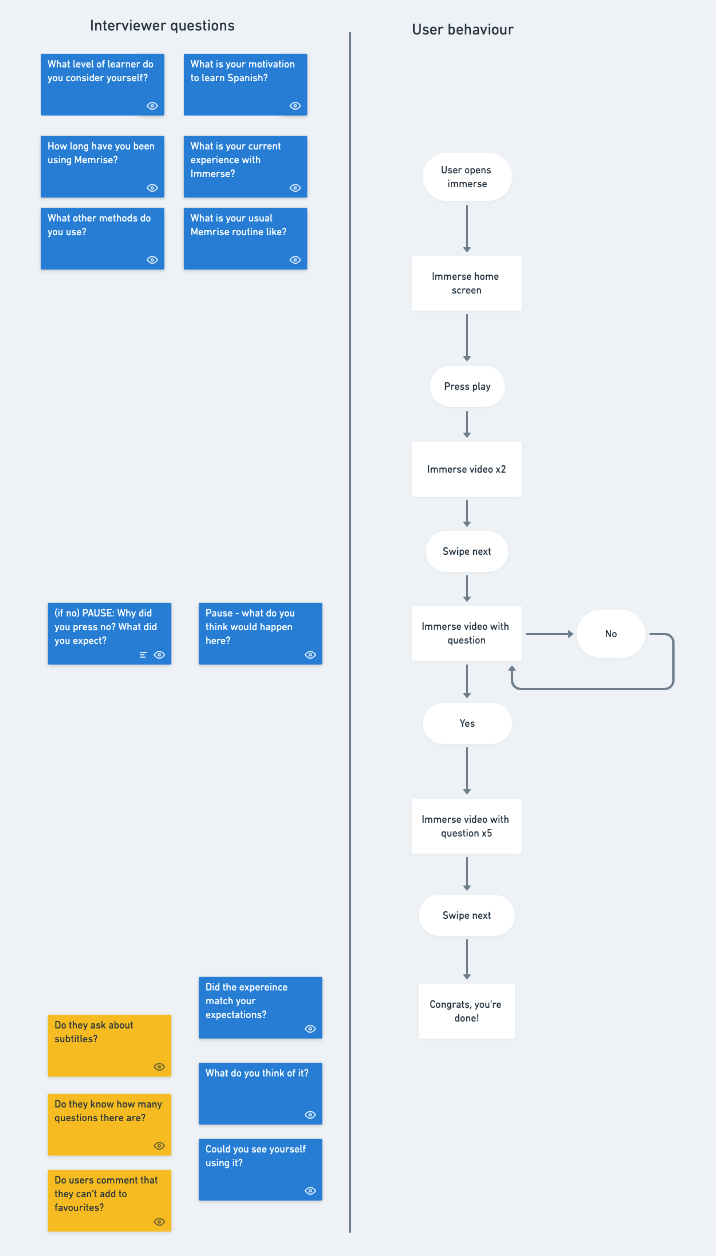
What we shipped, what we learned
Testing identified that putting a more human face to the AI could improve user confidence.
Based on this insight, we built out a version closer to the initial Immersive feed examples, with full-screen video and user responses.
Great response from user testing, with 90% of participants completing longer session lengths when using this feature.
Team invited to Apple HQ to further develop ML-utilising technology
Membot introduced into product starting in 2022
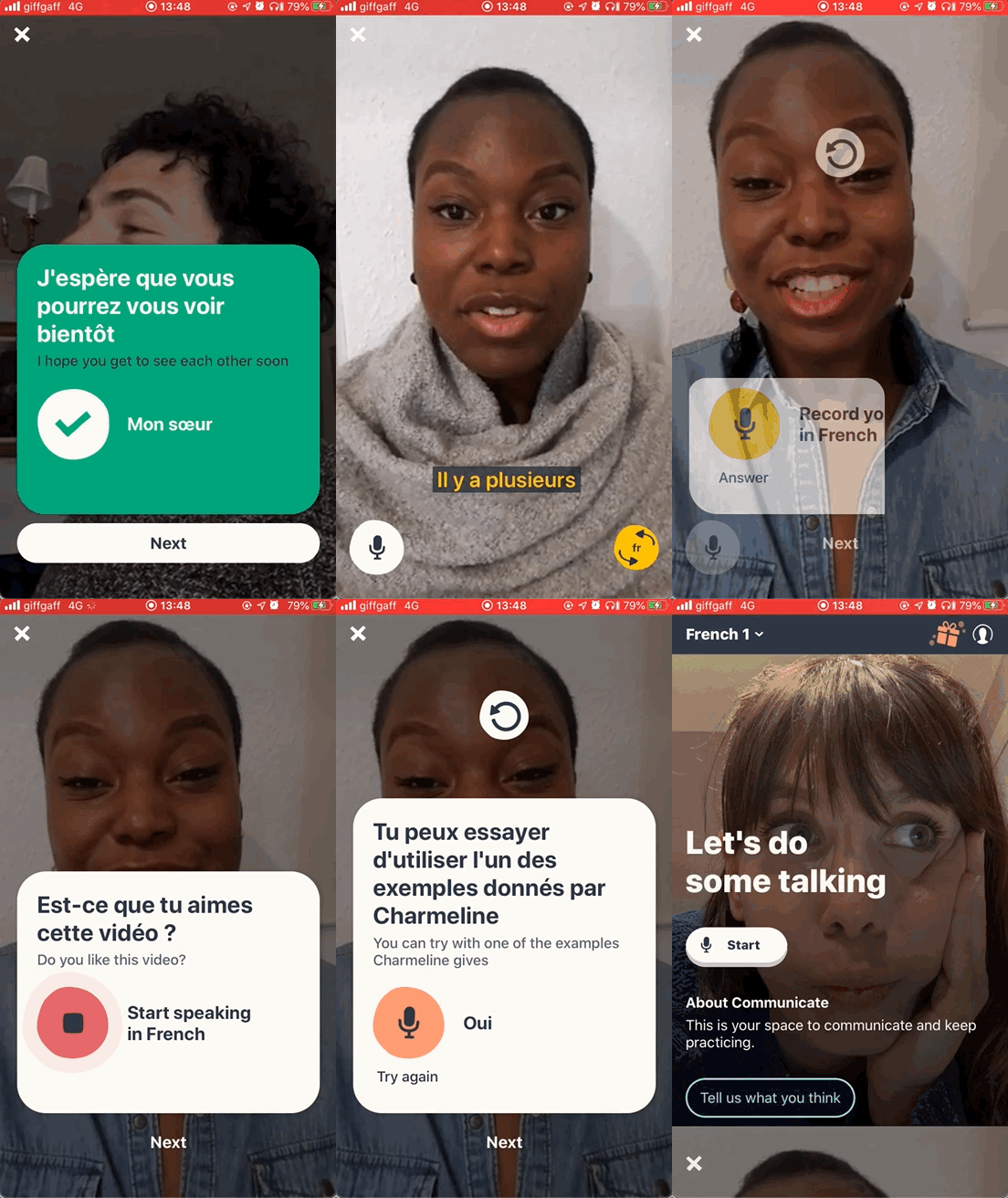
Video of the tech and experience working in the live product