
Drest
Farfetch eCommerce Integration
2022 ✦ Head of UX
What’s the problem?
How do you increase conversion to checkout... from a fashion styling app?
TL;DR
I increased eCommerce clickthrough by 8% by AB testing positioning and visibility of engagement prompts in a luxury fashion styling game.
Context and stakes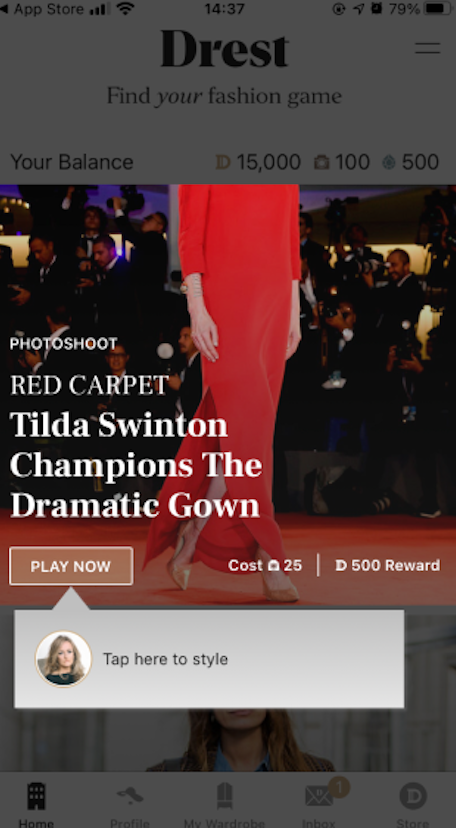
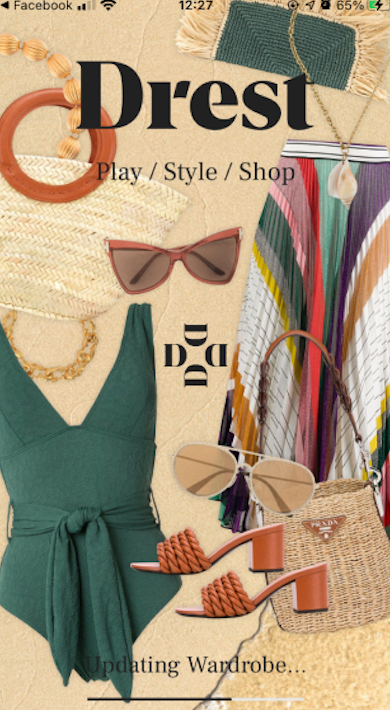
In Drest, the user purchases digital clothing to participate in styling challenges against other fashion lovers.
All of Drest’s fashion was real luxury fashion, our USP, created in collaboration with the houses (Gucci, Prada, Cartier etc), with click-through purchasing facilitated by our eCommerce partner Farfetch.
Though we had genre-leading content and partnerships, and an engaged user base, clickthrough to eCommerce was below what we thought it could be.
Drest app as it existed when I joined the projectConstraints
At the time of this project, we were deep in building out the new version of the product, while suporting the existing app and user base.
We needed to support our existing customers and partners on an old tech stack, while putting our important bets on the new product.
For this reason, I took on the design and research work of this project myself, deploying my senior designers to the buildout of the new product.
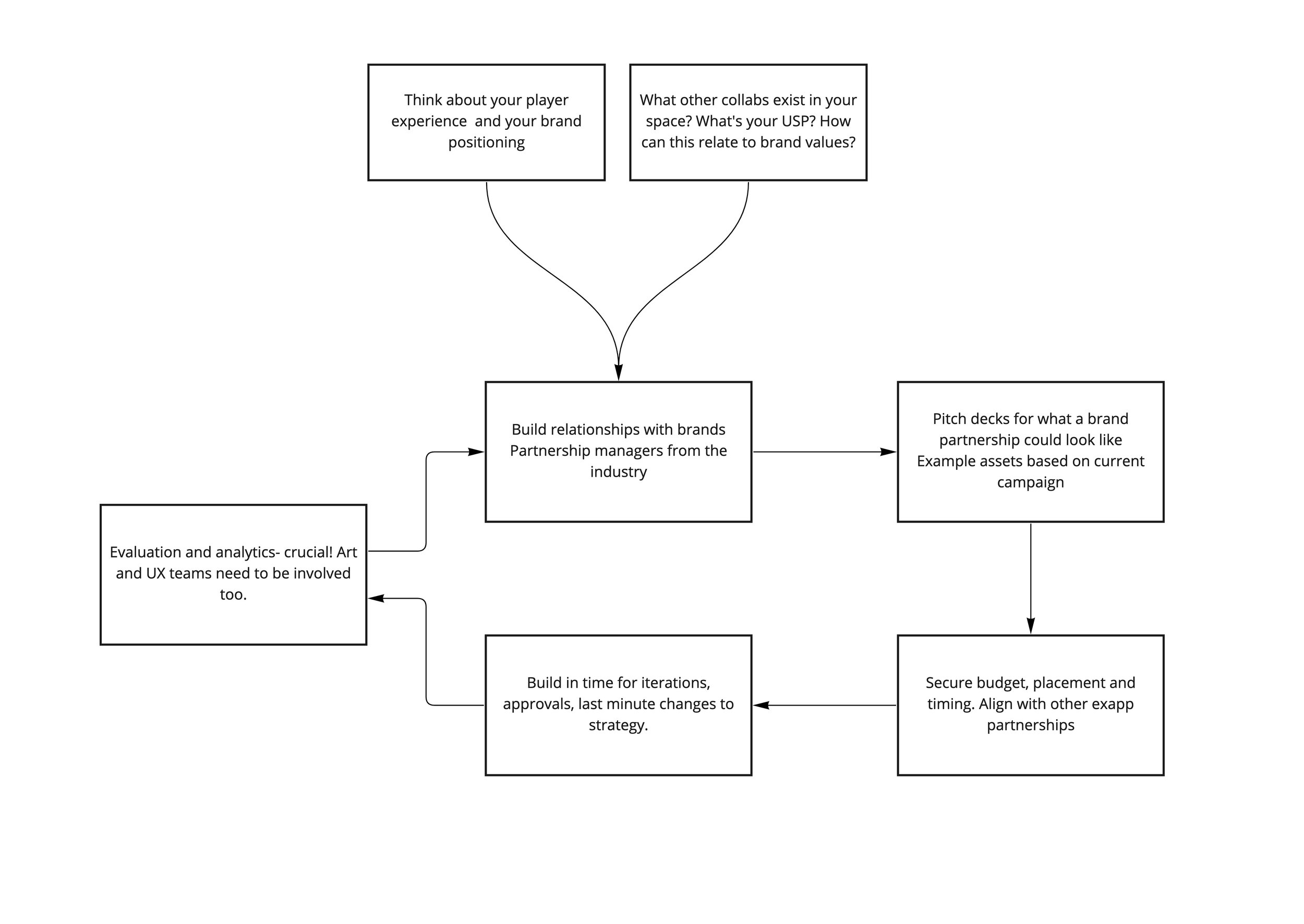
Process mapping - what was getting in the way of us delivering on the eComm promise?
I mapped the process internally and externally for handling brand partnerships and eComm integration, interviewing key stakeholders on both sides and facilitating alignment workshops. What was getting in the way of us doing our best work?
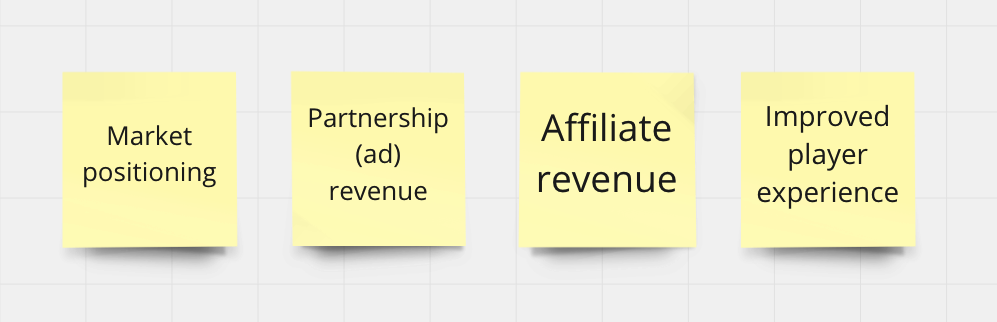
Framing the problem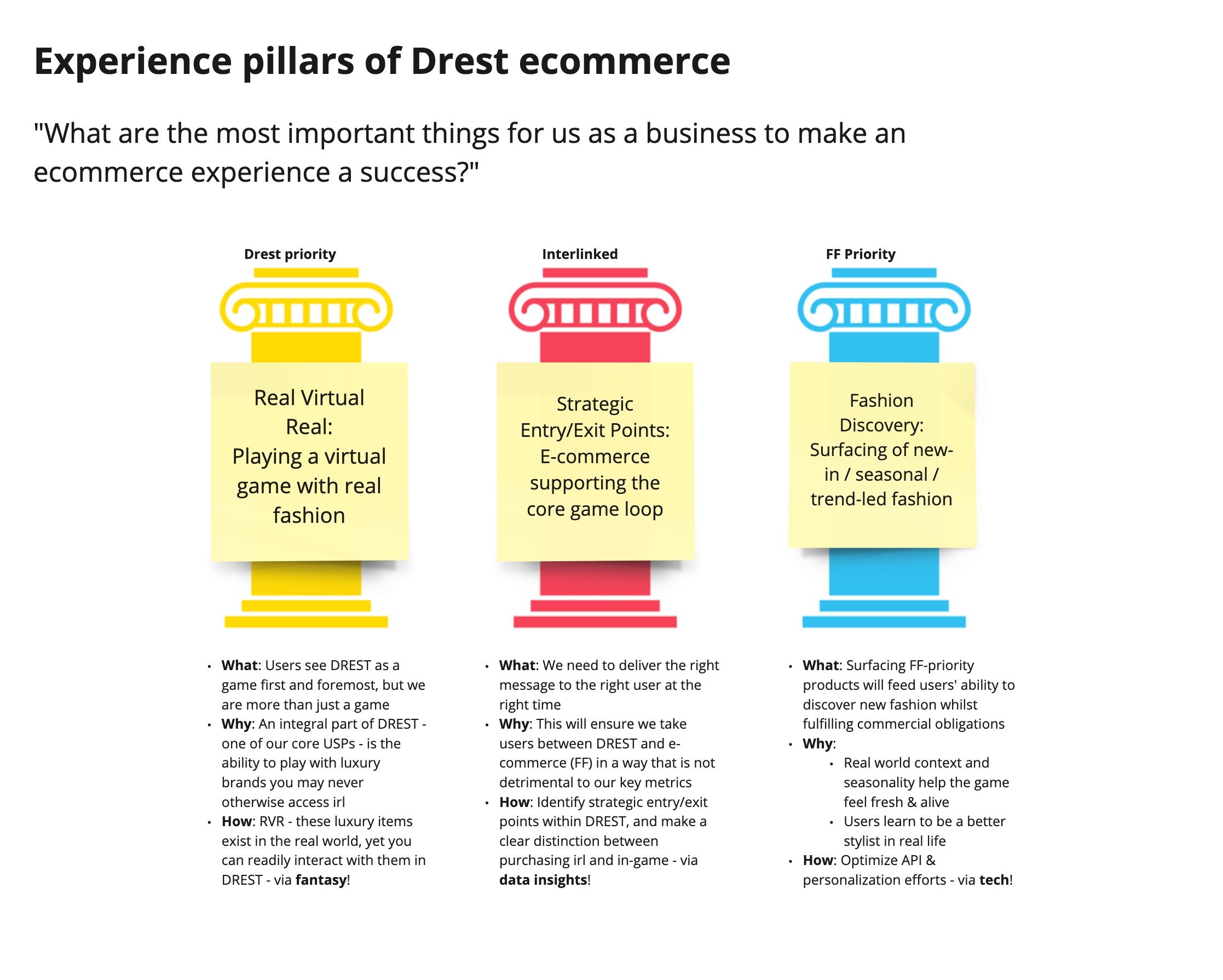
Along with senior leadership in our Fashion and Partnerships functions, I developed experience pillars to bridge the gap between Farfetch and our business.
I presented these pillars to leadership from both businesses to kick off development on the project.
Design Process
After conducting user interviews with our existing player base, I used Miro to map the flows of different personas per platform - shoppers versus gamers.
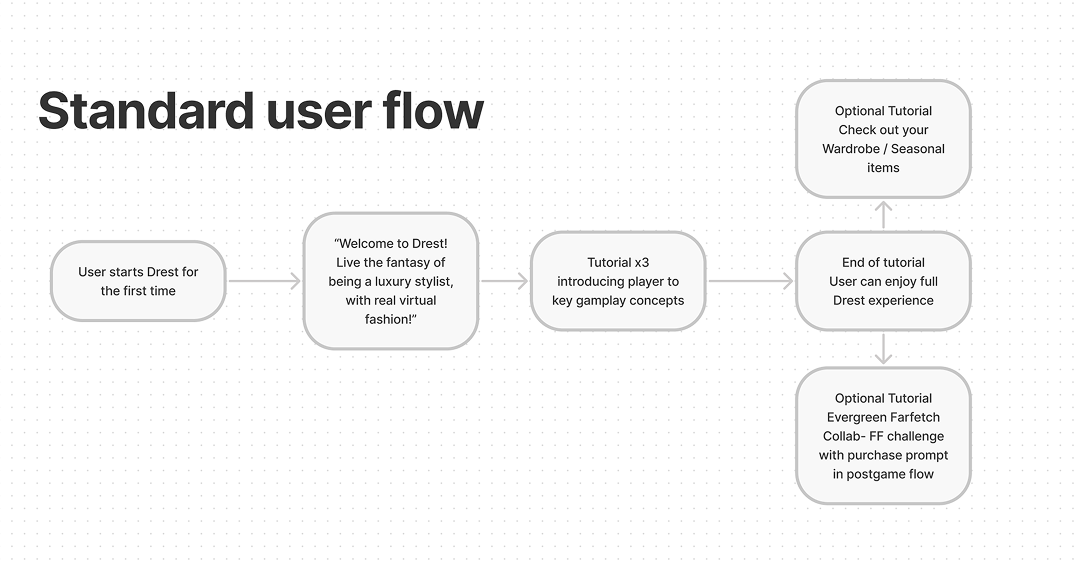
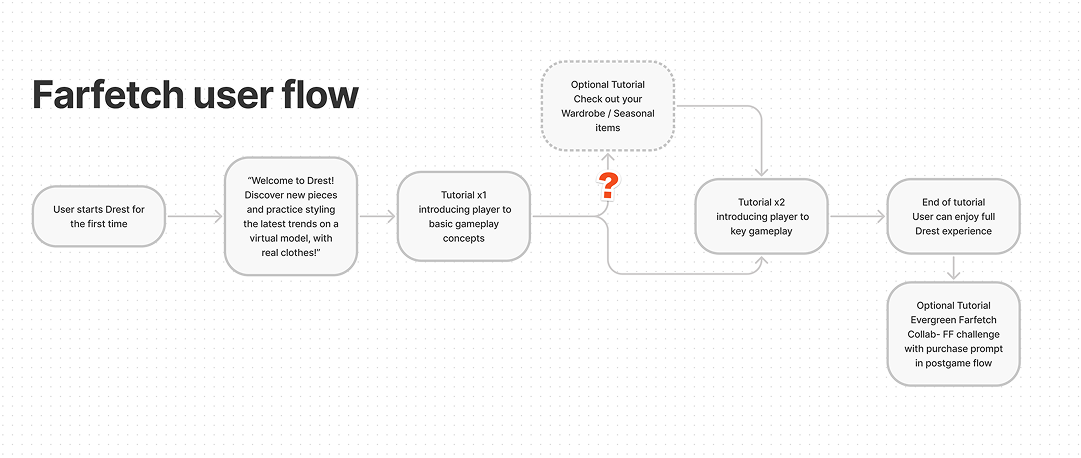
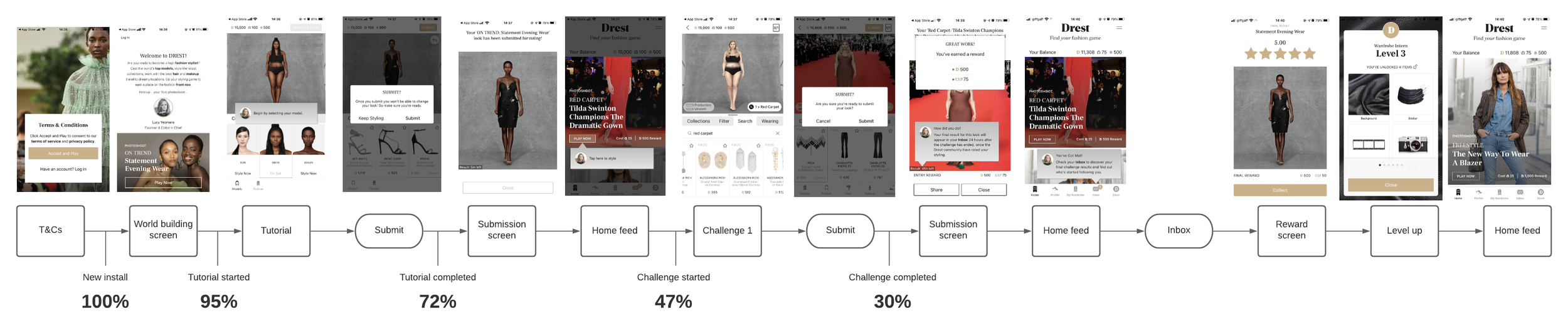
It was important that eComm upsells did not cannibalise tutorial completion metrics, so mapping our existing screen flow to funnel analytics was pertinent.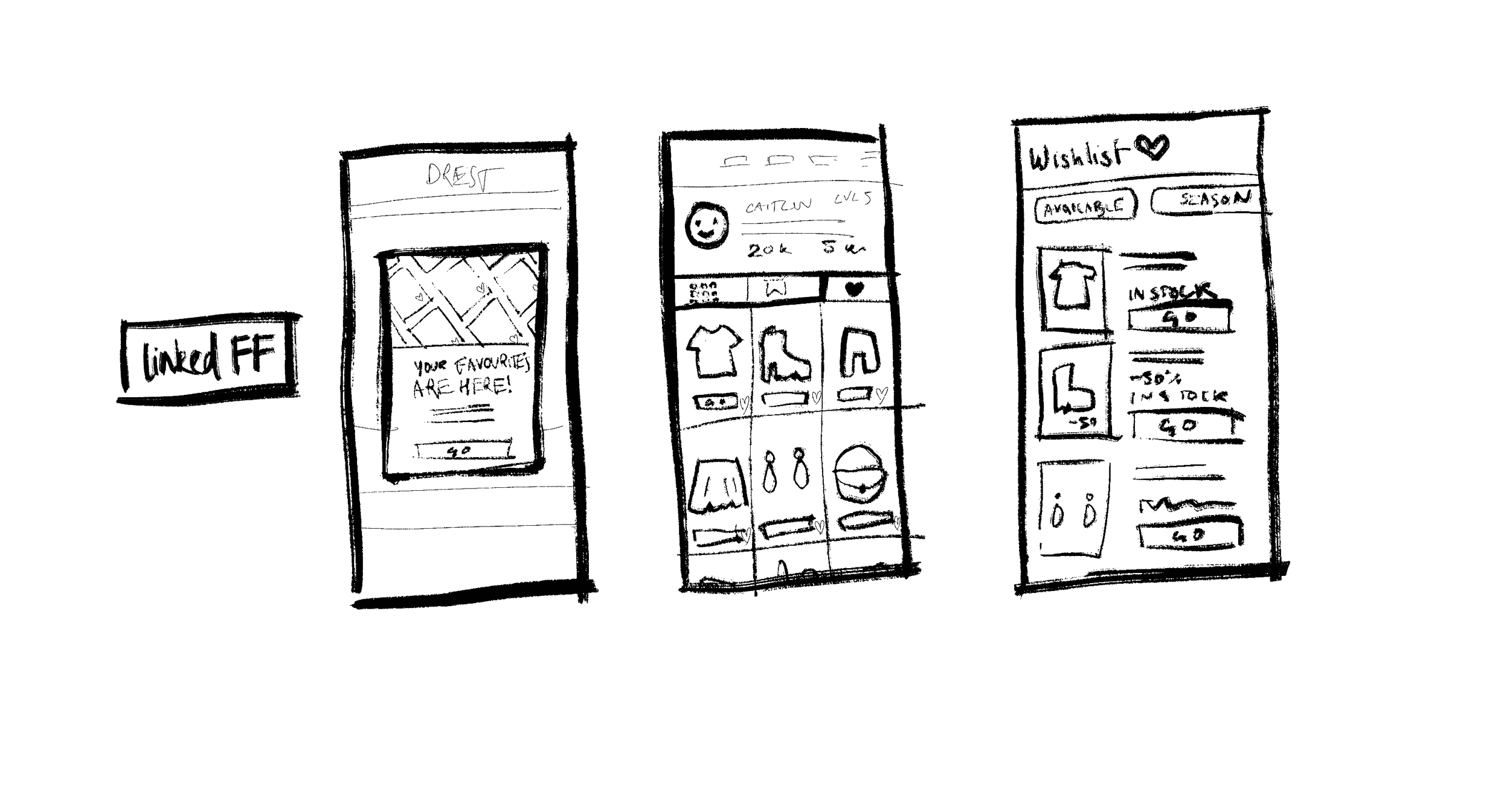
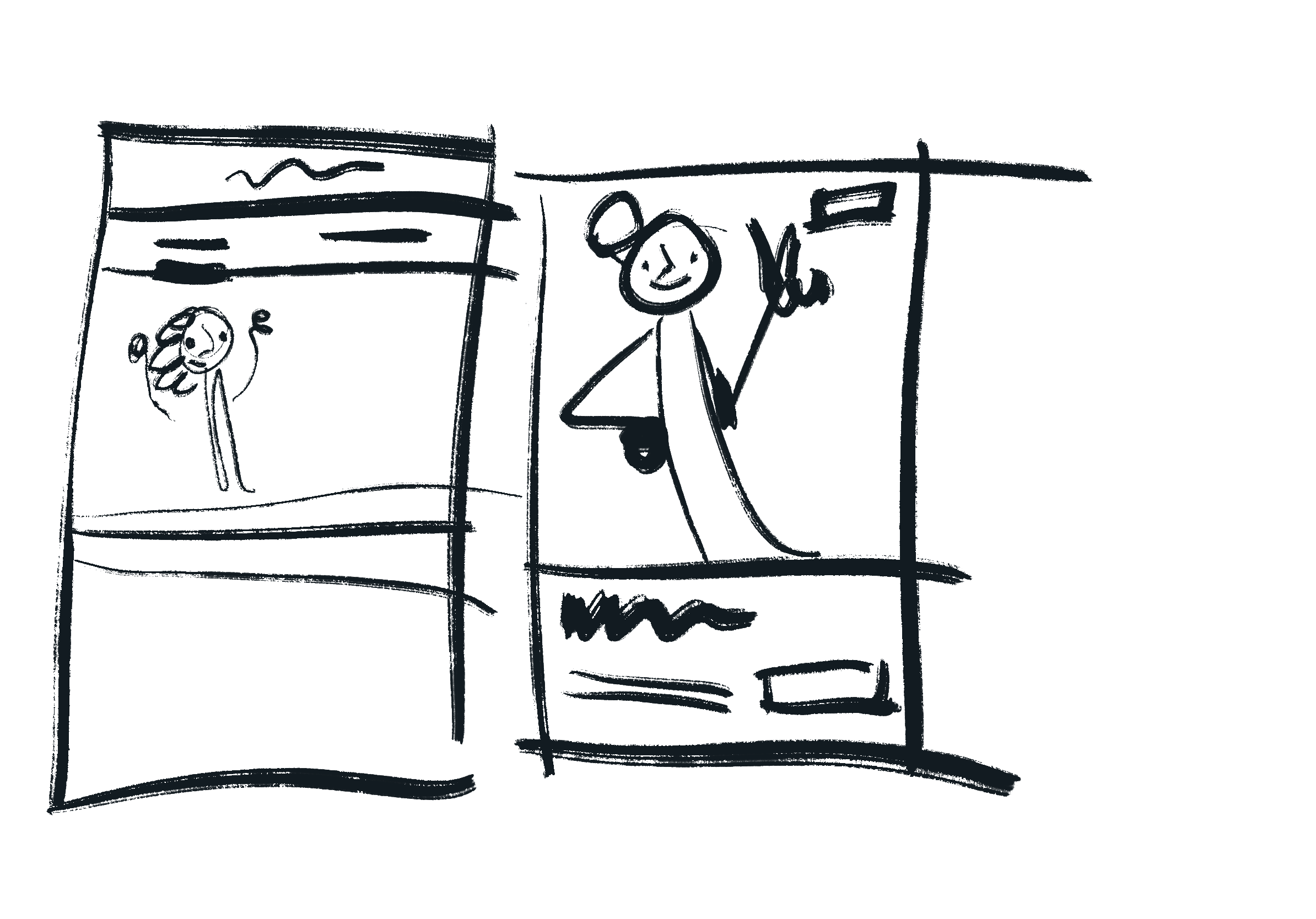
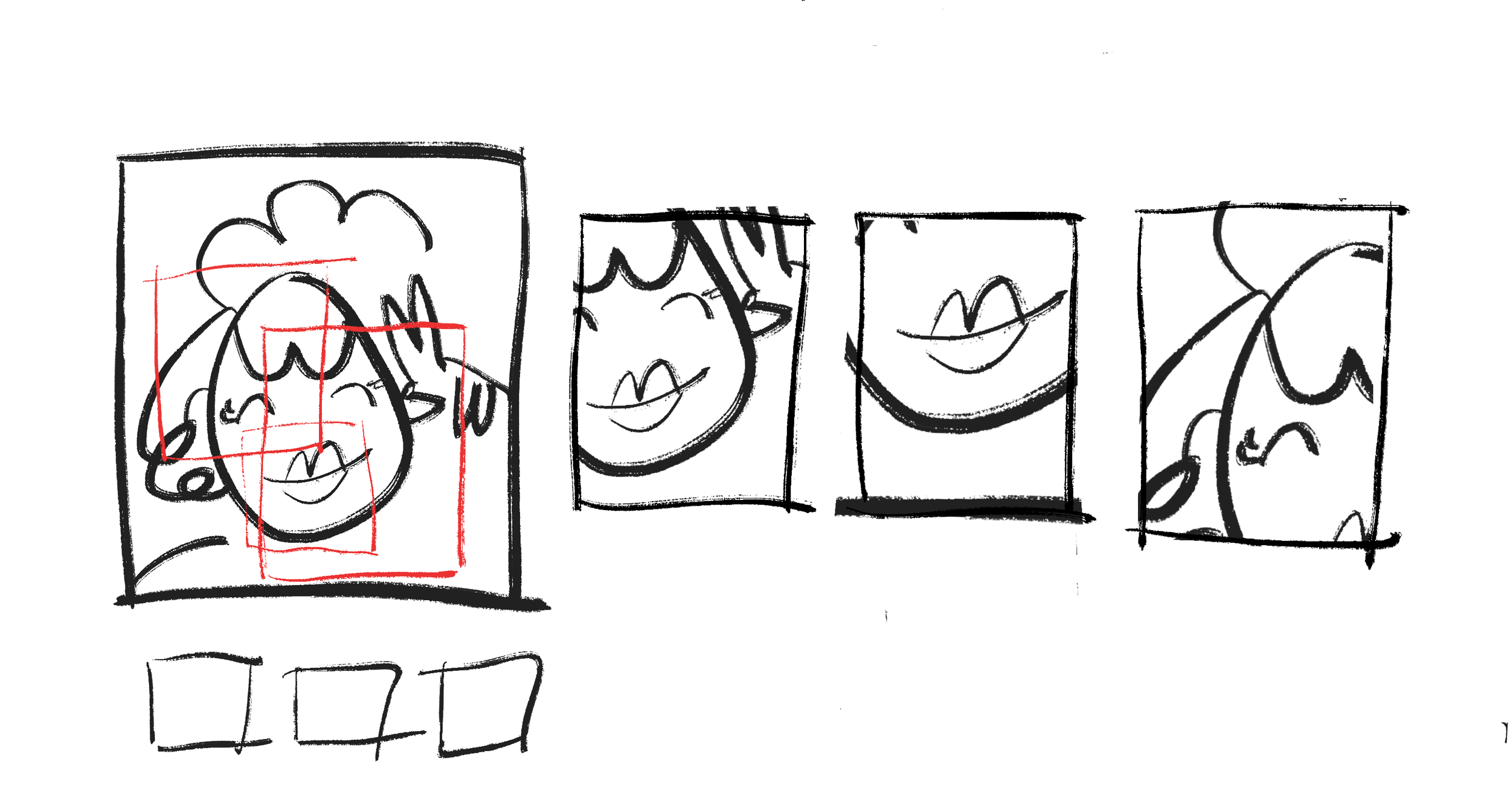
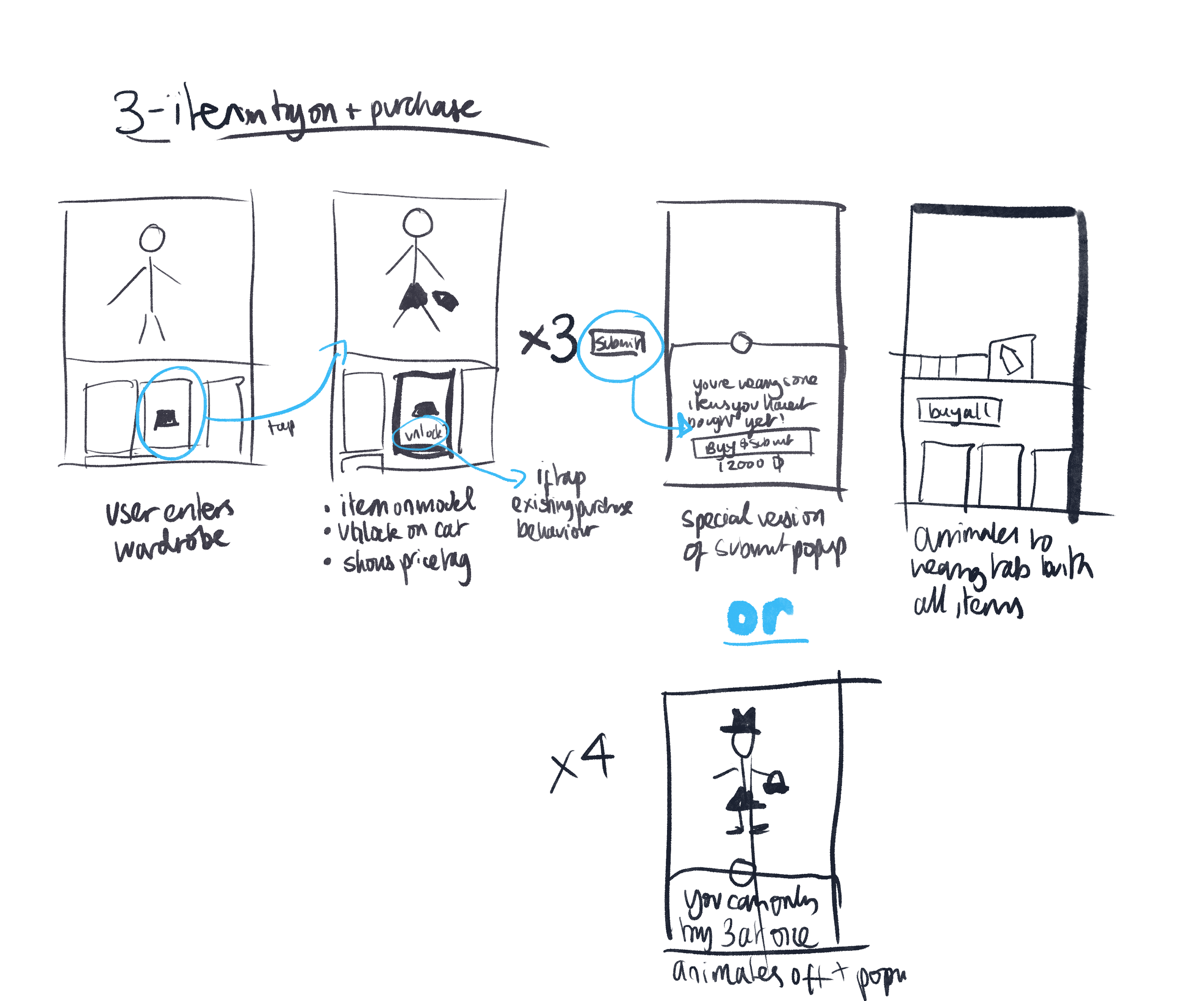
Sketches to quickly visualise product ideas and flows.
I love to sketch, and I believe it helps get to a variety of solutions quicker in a group than any solo genAI session.
Prototyping and ideation
I explored a variety of solutions informed by our user research and co-creation sessions. In turn I pitched these back to executive leadership and our eCommerce partner.
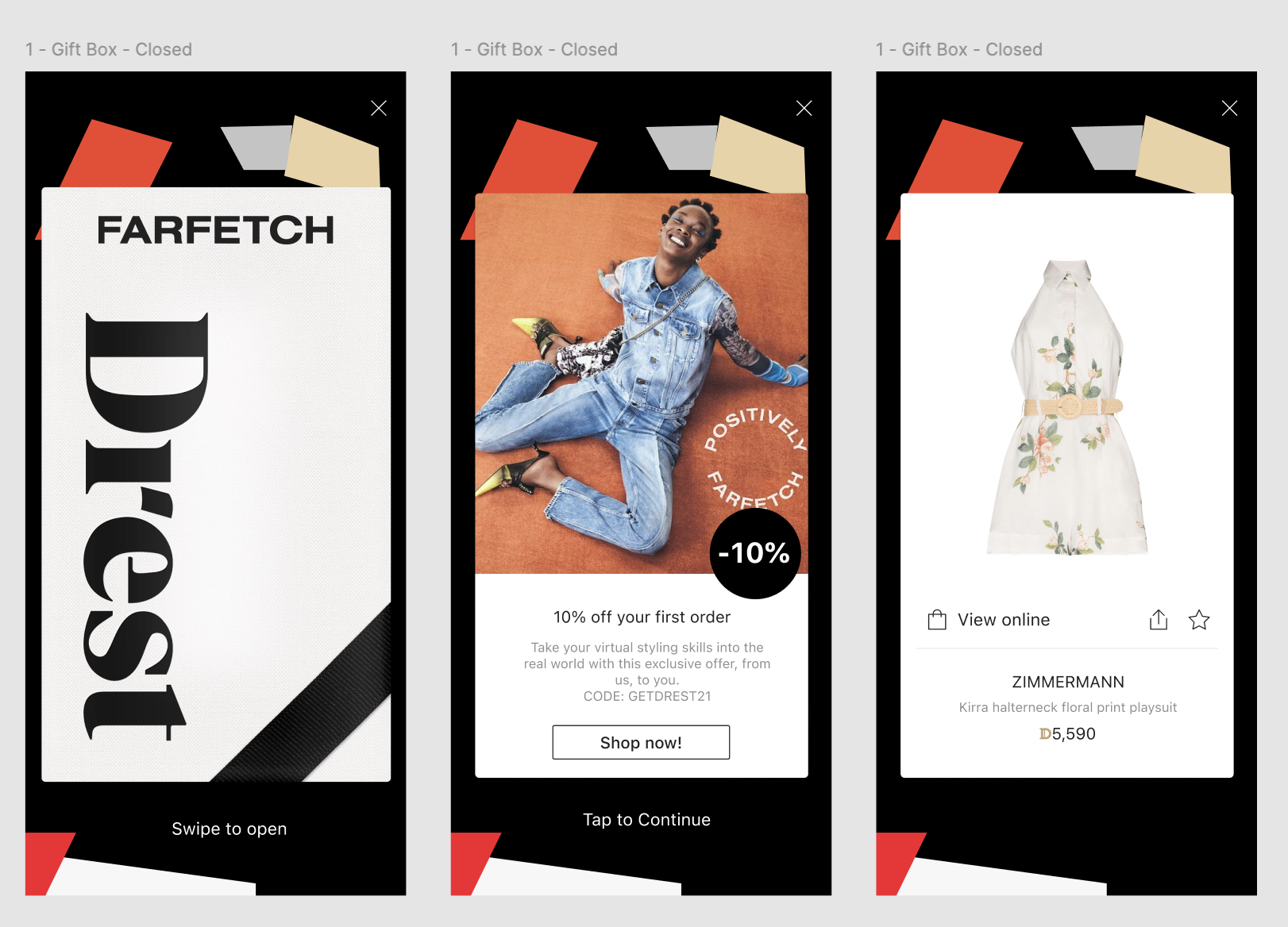
Gifting a real-world discount to challenge winners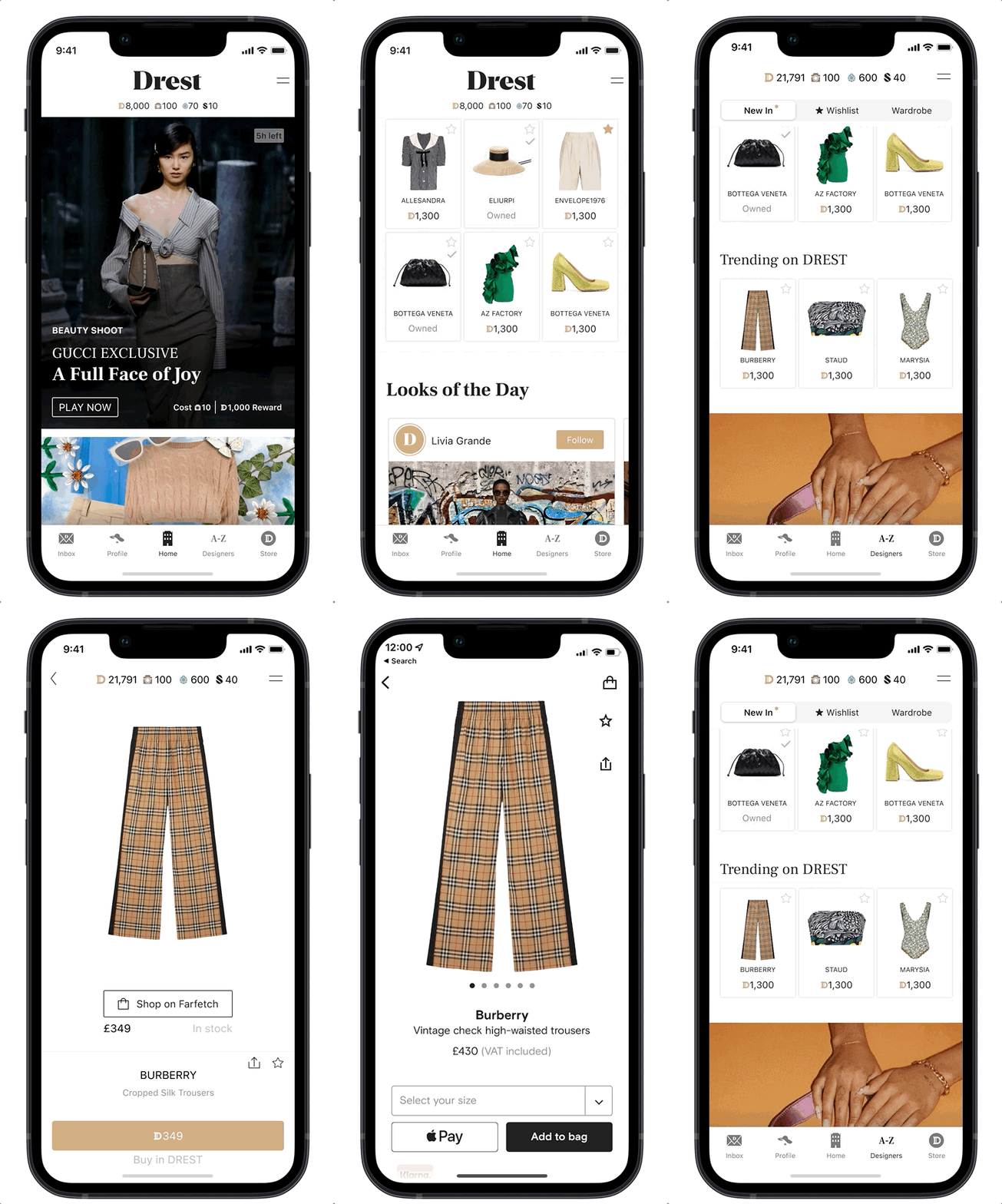
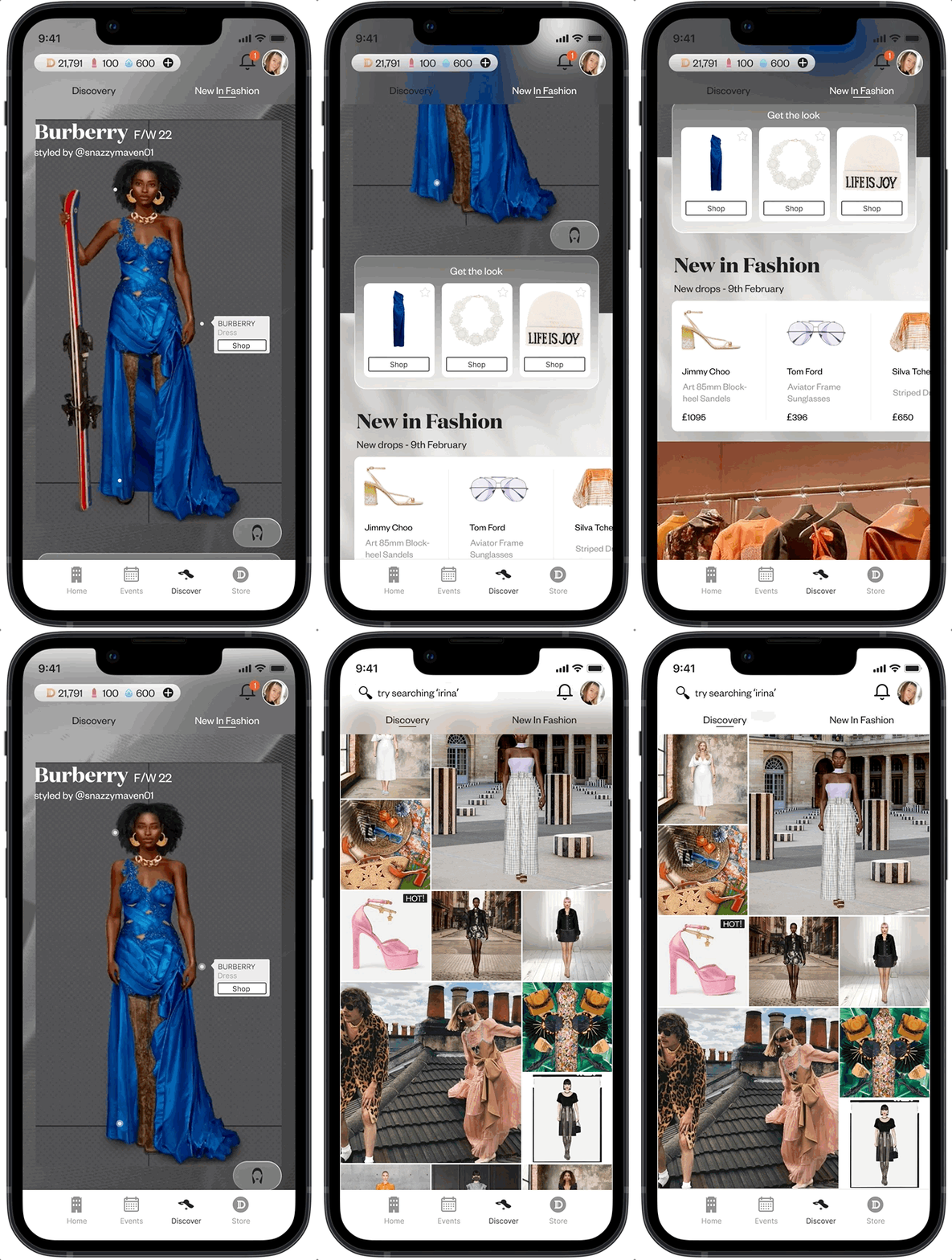
FF new-in drops given more prominence in home feed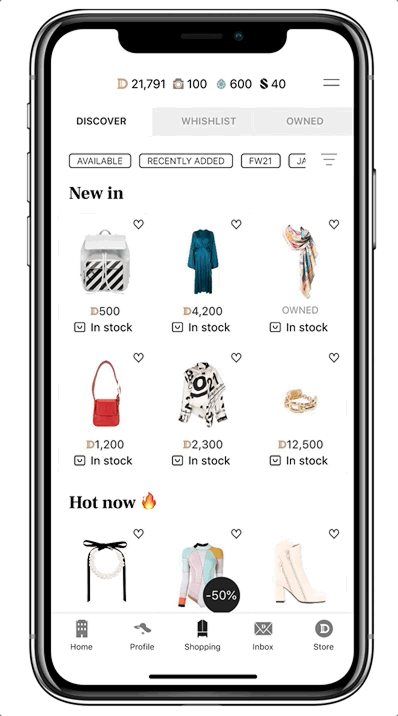
Syncing IRL wardrobe to gameI believe the most important quality in a UX designer is synthesising what the business needs, what fits aesthetically, and what engineering can accomplish with what the player will actually enjoy!
What we shipped, what we learned
We built several AB test experiments in the live Drest app, to compare different prompts and the effect they had on player behaviour, in the ‘Shopper’ and ‘Non-Shopper’ buckets we had identified.
From a design perspective, it was imperative to prompt the player to shop at key ‘high’ moments in the journey, such as when they have just won a styling challenge.
AB tested features increased conversion of players to Farfetch browsers by ~8%.
Sharing data and analytics across tech stacks remains challenging!
Deepened business relationship with Farfetch, a critical partner.
Created framework for future partnerships based on our learnings.
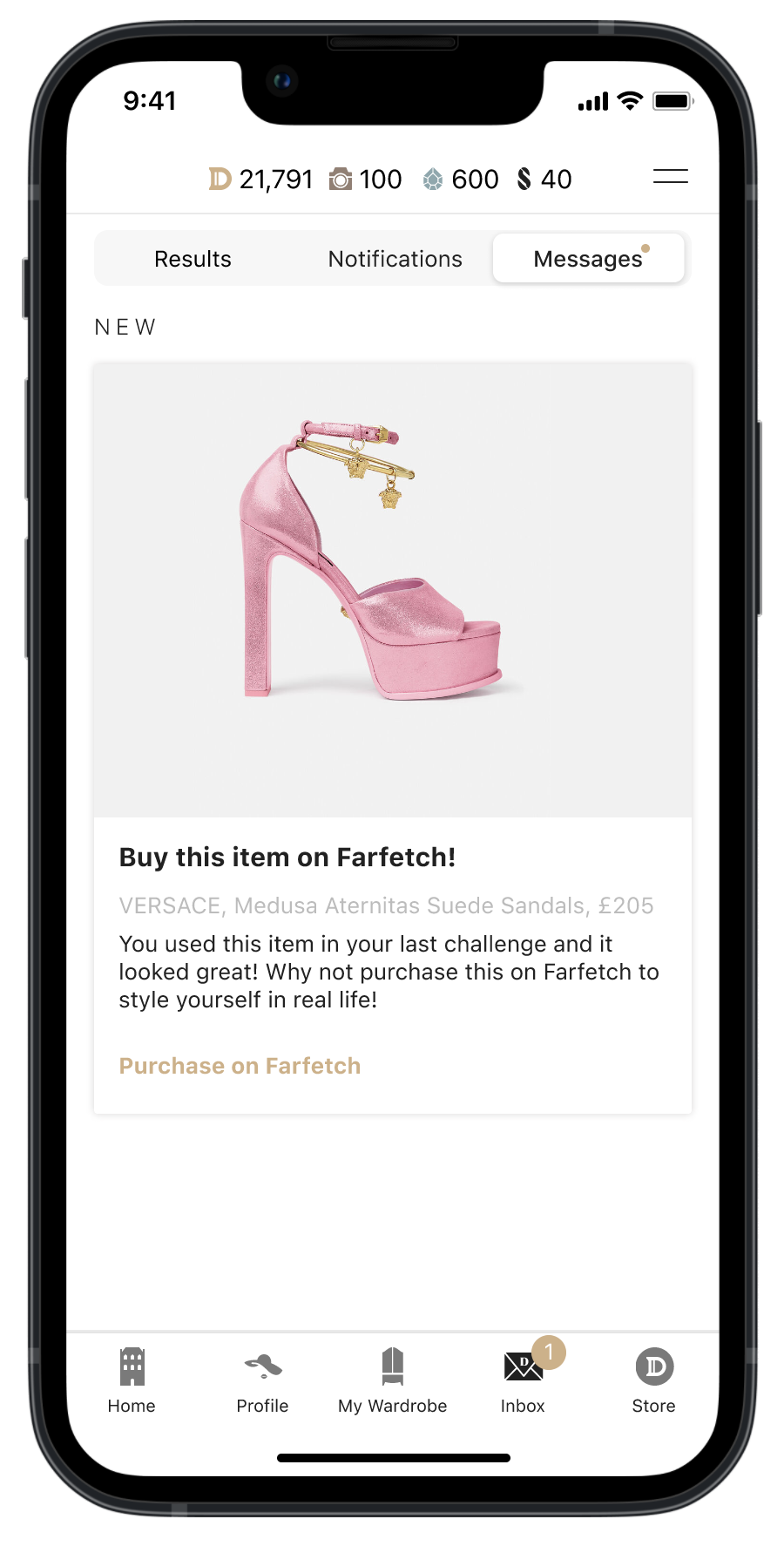
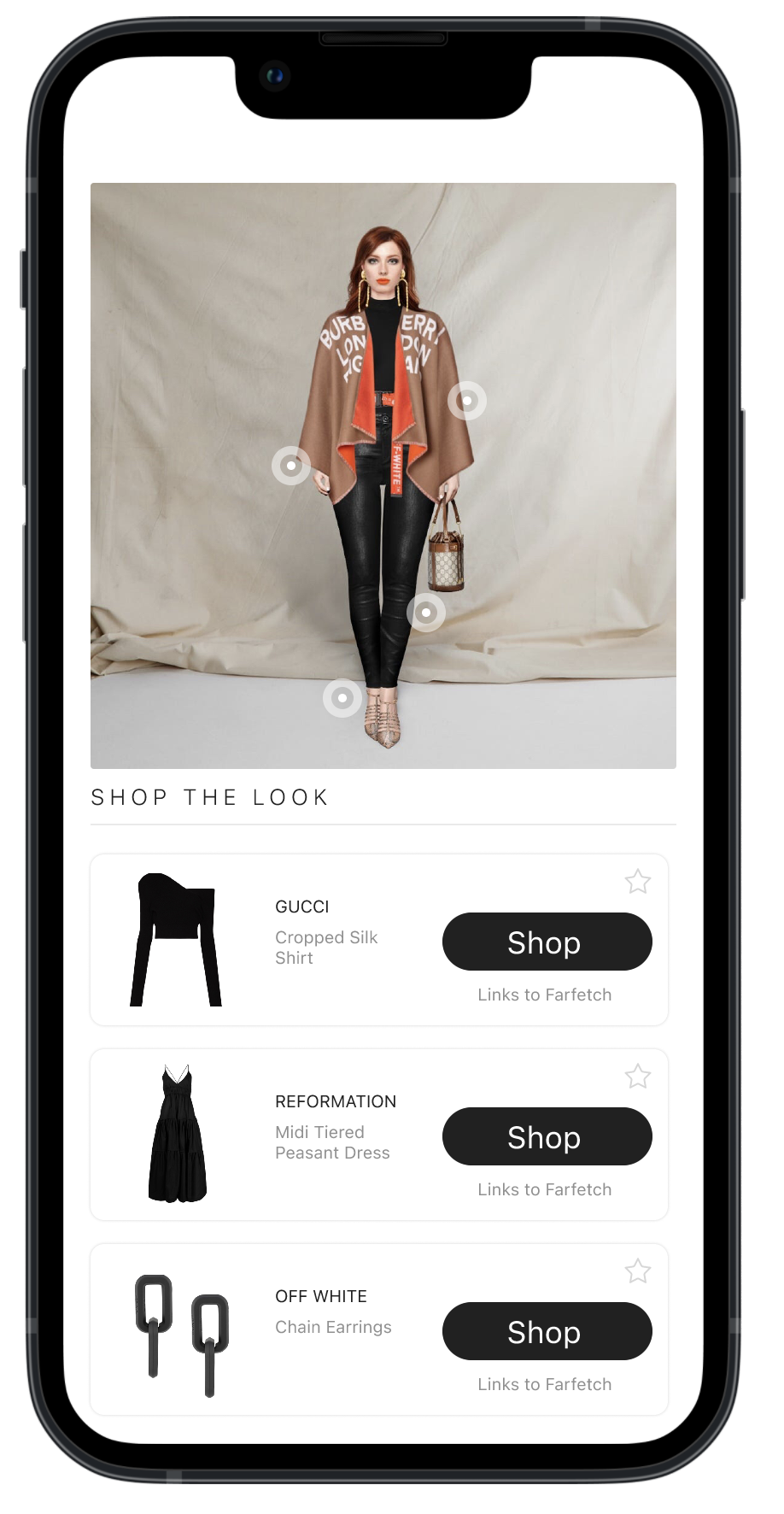
Post-challenge prompt - through messagingImmediate post-challenge prompt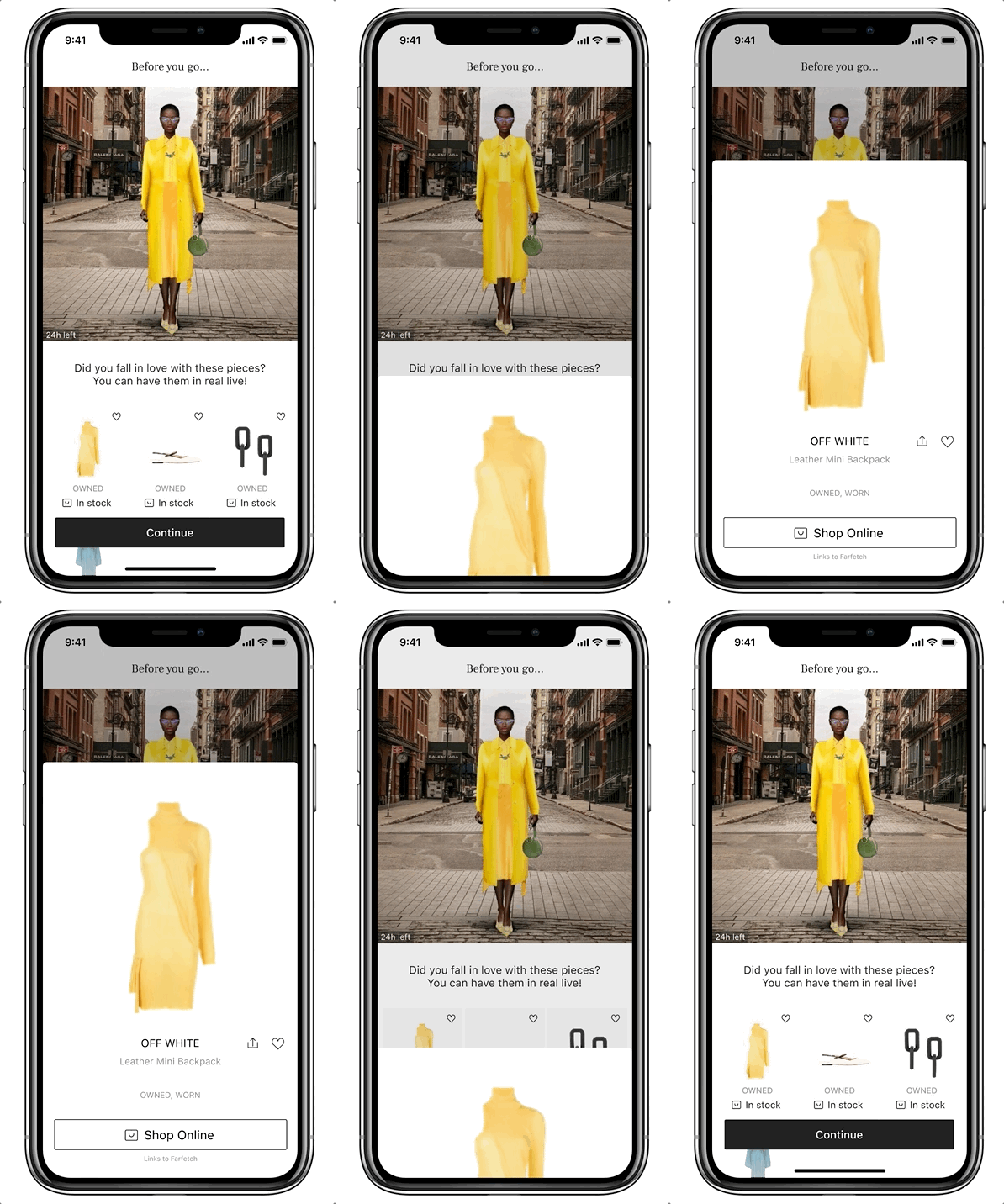
The Future

As this project was conducted alongside the buildout of the new product, I conceptualised how advanced eCommerce integration to could tie seamlessly into a more playful, technically sophisticated version of the product.